The Computational Behavioral Science Lab uses digital technologies to study human activity at scale. We combine approaches from the behavioral and social sciences with the latest computational and statistical methods to understand how activity patterns relate to psychological, behavioral, social, organizational, and economic outcomes.
Our current research focuses on developing and evaluating machine learning and AI-based models to predict and explain human characteristics and life outcomes. These include stable traits and abilities (e.g., personality and cognition), momentary psychological states (e.g., affect), and downstream outcomes (e.g., decisions and life trajectories).
Director
Postdoctoral Researcher
Postdoctoral Researcher
PhD Student
External PhD Student
Affiliated Postdoctoral Fellow
Research Intern
Visiting Researcher
Visiting Researcher
Visiting PhD researcher
Learn more about the Actwell project:
Actwell
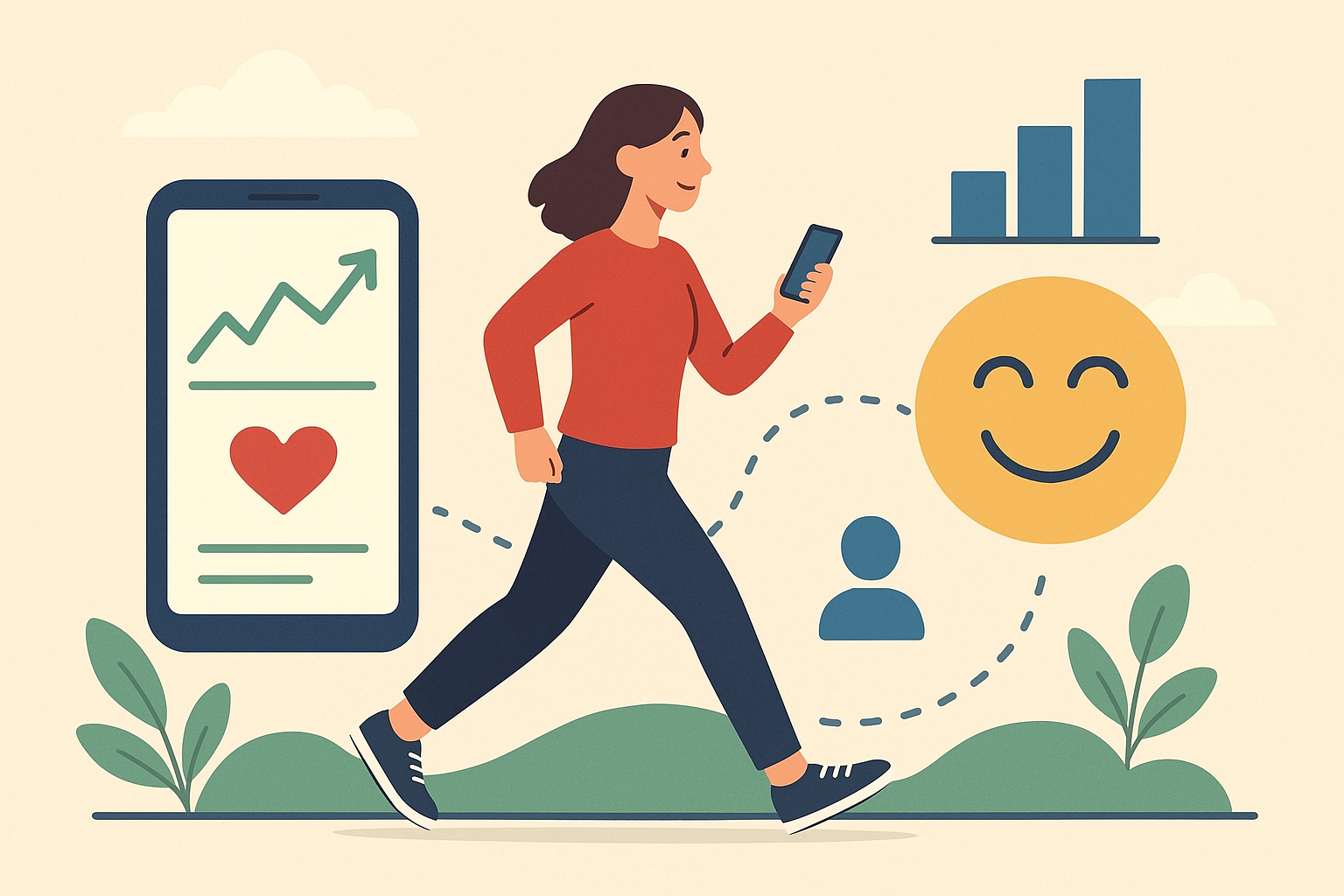
We study how life satisfaction — a core component of well-being — manifests in everyday behavior. This project focuses on physical activity captured via smartphones, which provide objective, fine-grained measures compared to traditional survey-based approaches. Using interpretable machine learning, we relate high-dimensional representations of physical activity patterns to individual differences in life satisfaction. Drawing on an international sensing dataset that combines independent data collections from three countries and time periods, we identify intricate activity patterns associated with life satisfaction that vary systematically with personality and other individual characteristics. Situated at the intersection of positive psychology and computational behavioral science, this work advances smartphone-based approaches for understanding how well-being is expressed in daily life.
Bergmann, M., Müller, S., Schoedel, R., & Stachl, C. (2025). Satisfaction with Life Manifests in Physical Activity Patterns Captured with Smartphones (G83fn_v1). PsyArXiv. https://doi.org/10.31234/osf.io/g83fn_v1
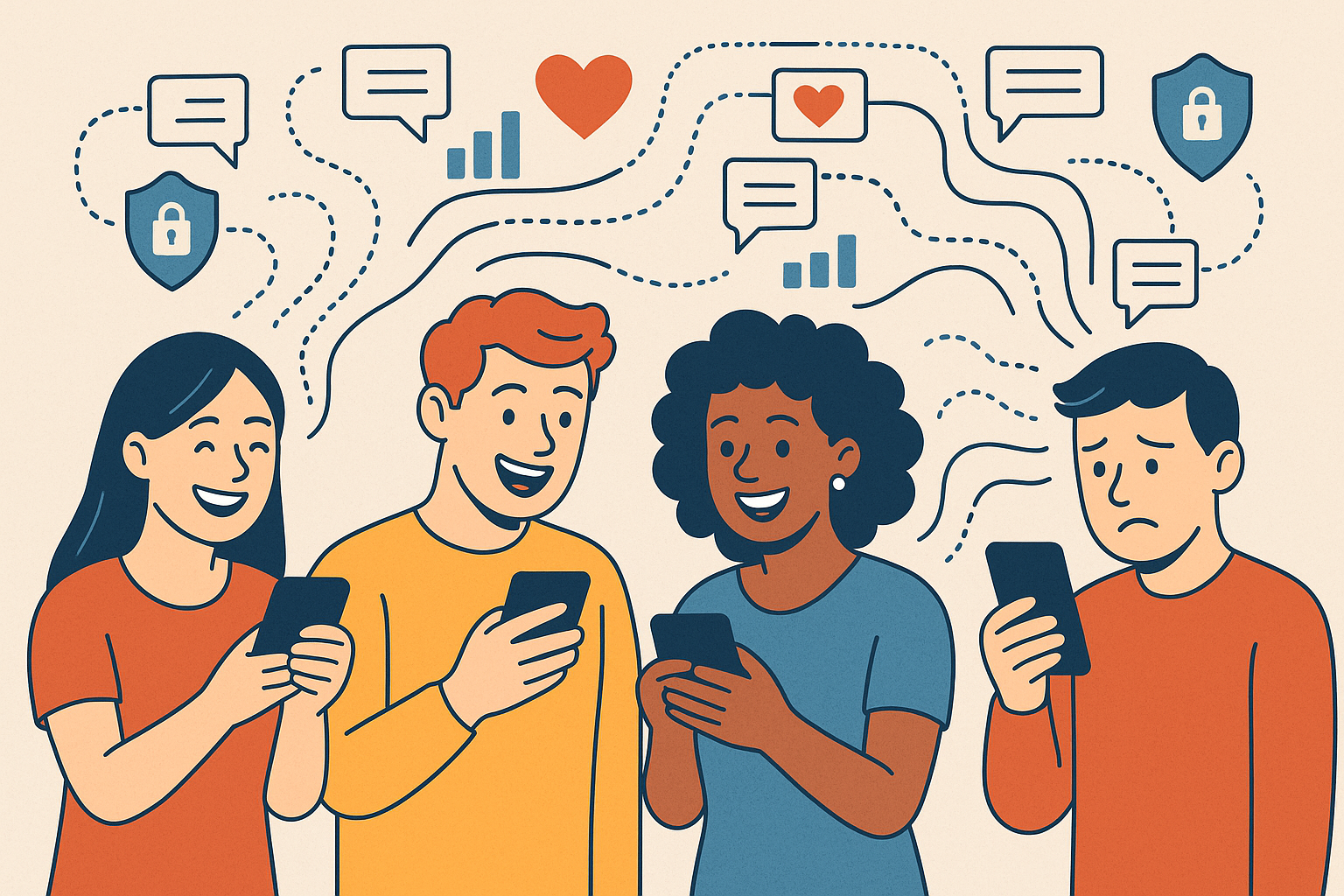
We explore how everyday smartphone data can help recognise and understand people’s affective states in real-world contexts. We combine naturalistic sensing (e.g., text, speech, smartphone usage patterns) with in-the-moment self-reports to study affect dynamically across individuals and time. Methodologically, we develop interpretable, privacy-preserving models that integrate linguistic, behavioral, and temporal signals while emphasizing transparency, ethics, and robust validation. This work sits at the intersection of affective science, computational social science, and machine learning, with the long-term goal of enabling respectful, human-centered technologies that support well-being.
Koch, T. K., Harari, G. M., Gosling, S. D., Marrero, Z., Schoedel, R., Bühner, M., & Stachl, C. (2025). Brief Speech Samples Reveal Emotional States in Daily Life (N48uz_v2). PsyArXiv. https://doi.org/10.31234/osf.io/n48uz_v2
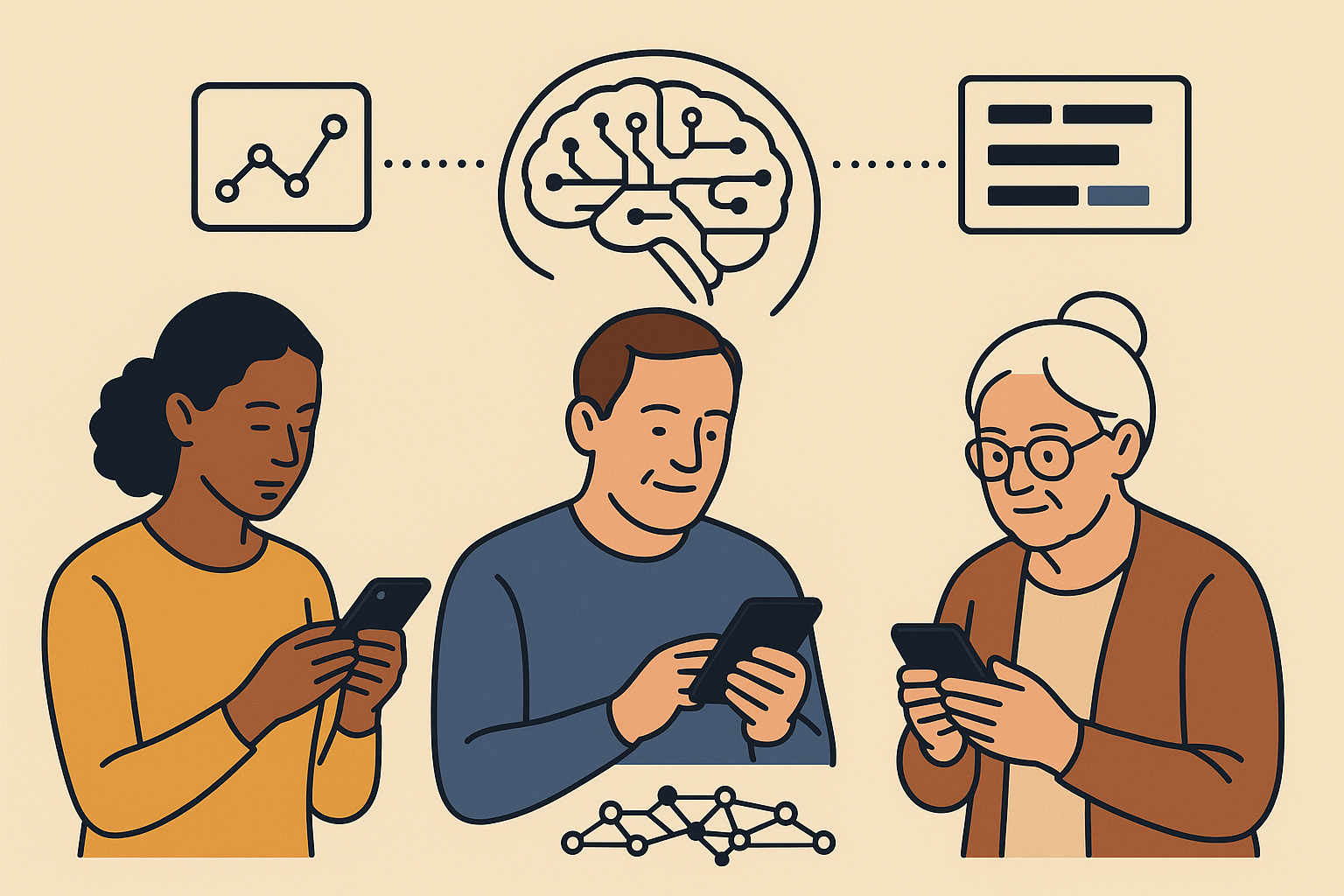
We use smartphone-based digital traces to investigate cognitive abilities in daily life. Applying theory-informed machine learning to intensive longitudinal data, we examine how everyday smartphone usage predicts fluid intelligence — the most central component of human intellect. Interpretable machine learning methods help us understand the relationships between ability levels and behavior. Initial findings suggest smartphone-based cognitive inference could complement traditional assessments, supporting early identification of cognitive fit and personalized intervention. This approach may help detect ability-demand misfits, flag the need for neurocognitive assessment, or in extreme cases, help prevent unnoticed emergence of severe cognitive impairment.
Bergmann, M., Schoedel, R., Bühner, M., & Stachl, C. (2025). Digital Traces of Everyday Smartphone Usage Predict Fluid Intelligence (Adqre_v1). PsyArXiv. https://doi.org/10.31234/osf.io/adqre_v1
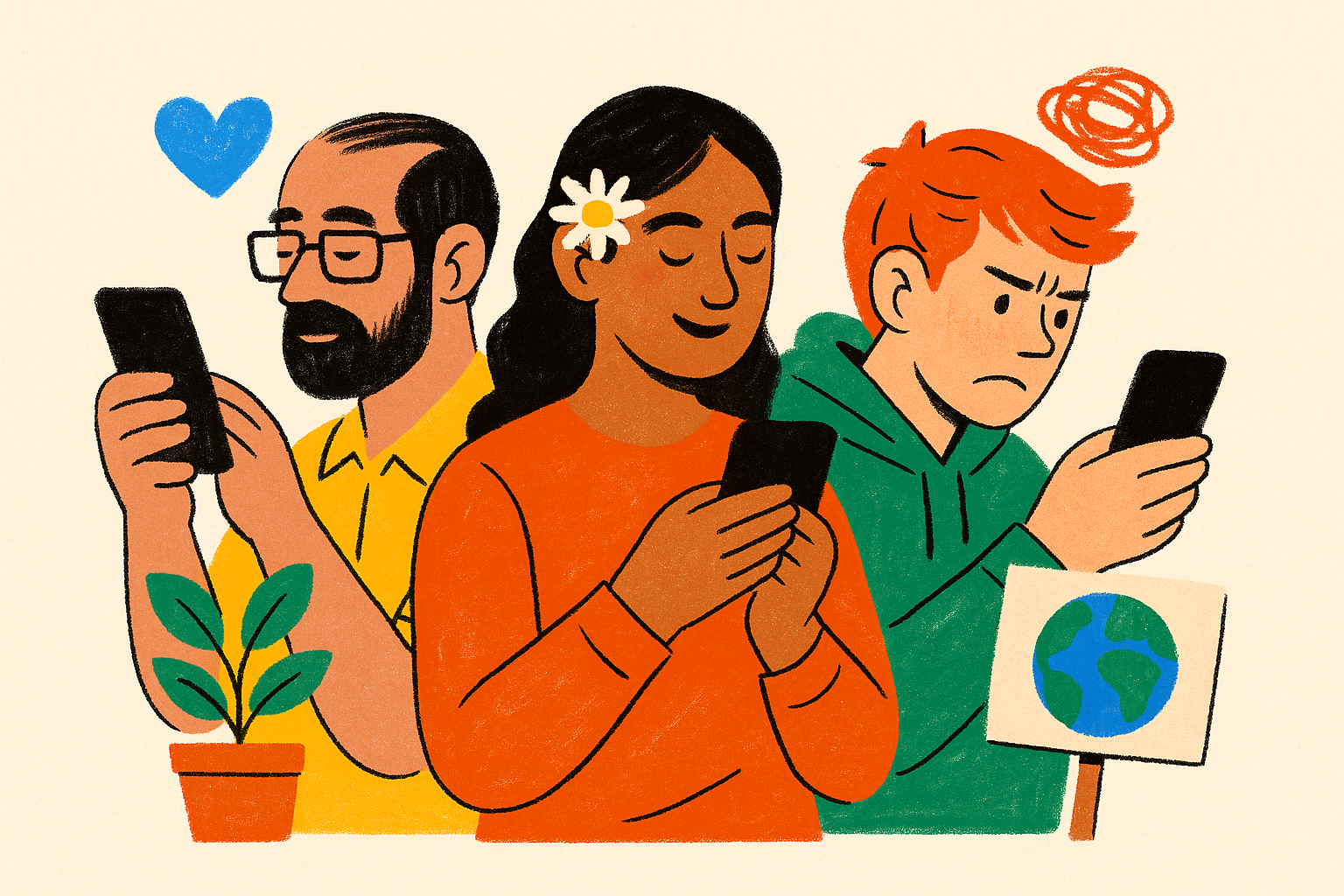
We study how everyday digital behaviors predict important life outcomes, and how these predictions compare to traditional approaches in personality science. Our research focuses on smartphone data — rich, ecologically valid traces of communication, mobility, and app use — often proposed as alternatives to self-reported personality measures like the Big Five. Rather than treating digital traces as a replacement for personality questionnaires, we establish empirical benchmarks: Where do smartphone-derived behaviors add unique predictive value? Where do they fall short? How can they complement established personality models? This work clarifies the promise and limits of digital behavioral data and develops a more nuanced view of how personality and behavior jointly shape life outcomes.
Digutsch, J., Sust, L., Schoedel, R., Bühner, M., Koch, T. K., Bergmann, M., Aluffi, P. A., Racek, D., & Stachl, C. (2025). Everyday Smartphone Behaviors Predict Life Outcomes (X95em_v1). PsyArXiv. https://doi.org/10.31234/osf.io/x95em_v1