
Although AI has become increasingly smart, its wisdom has not kept pace. In this talk, I examine what is known about human wisdom and sketch a vision of its AI counterpart. I analyze human wisdom as a set of strategies for solving intractable problems-those outside the scope of analytic techniques-including both object-level strategies like heuristics [for managing problems] and metacognitive strategies like intellectual humility, perspective-taking, or context-adaptability [for managing object-level strategies]. I argue that AI systems particularly struggle with metacognition; improved metacognition would lead to AI more robust to novel environments, explainable to users, cooperative with others, and safer in risking fewer misaligned goals with human users. I discuss how wise AI might be benchmarked, trained, and implemented.
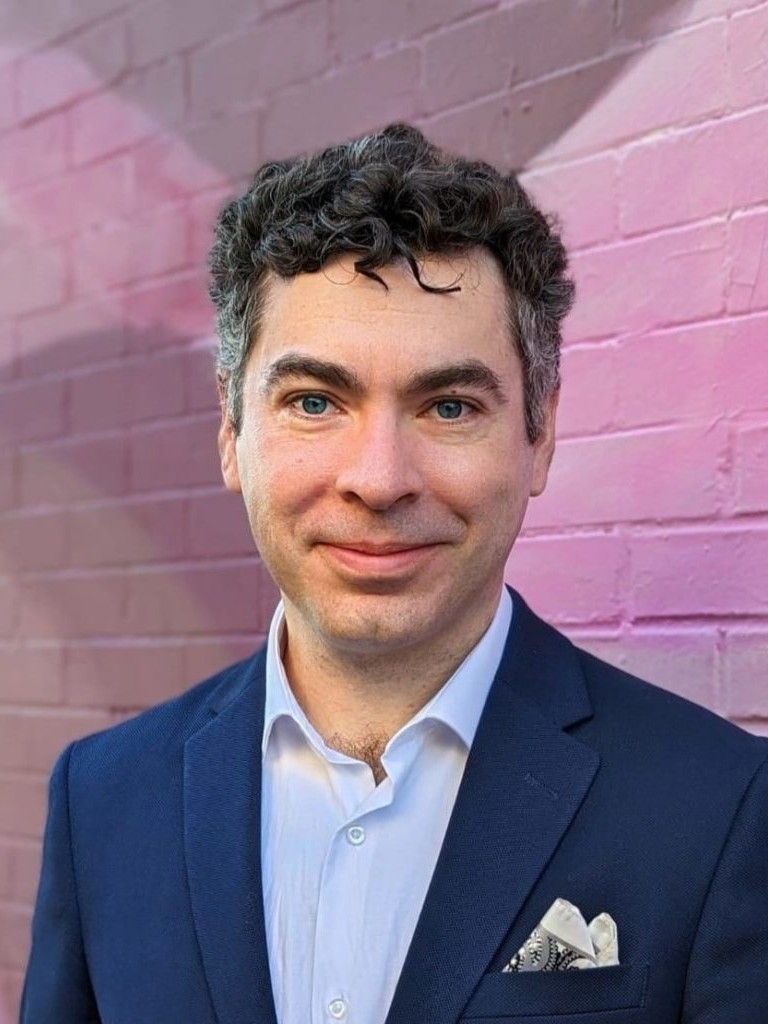
Igor Grossmann is a Professor of Psychology at the University of Waterloo. His interdisciplinary research bridges philosophy, anthropology, computer science, economics, and psychology to study human judgment and wisdom. He developed the Common Wisdom Model, exploring how cultural and environmental factors shape decision-making and whether wisdom is a distinct human capacity. Grossmann is advancing the cutting edge of psychological and social sciences by pioneering the use of Large Language Models (LLMs) and Natural Language Processing (NLP) to analyze complex narratives and societal dynamics at scale. He founded the international Wise Judgment Consortium and the Forecasting Collaborative, leveraging these computational techniques to challenge Western-centric views of decision-making. An Elected Council Member of the College of the Royal Society of Canada and recipient of major awards from the APA, APF, APS, and SPSP, he also co-hosts the On Wisdom Podcast and has lead the Futurescape and World-after-COVID initiatives.